



I opened Gopuff with a very specific kind of errand in mind: not a planned weekly shop, but the small, inconvenient gap between what I have at home and what I need right now. That distinction matters. This is a Food & Drink app from Gopuff, built around groceries, prepared food, drinks, and everyday essentials rather than the slower rhythm of filling a large trolley. In my experience, it makes the most sense when convenience is worth more than browsing every possible brand or hunting for the lowest price.
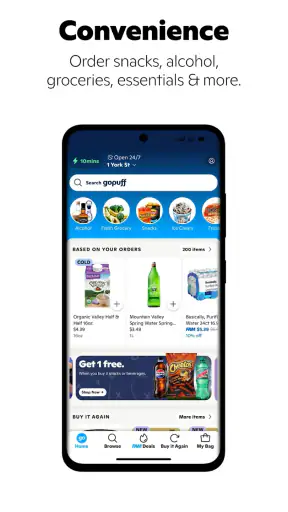
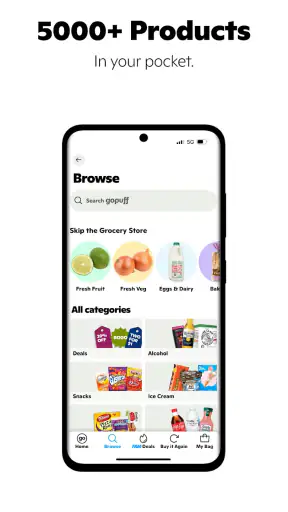
The first impression is straightforward. I can search for an item, browse the available selection, add what I need, and move toward checkout without treating the app like a full supermarket catalogue. Its store summary promises delivery in as fast as 15 minutes and highlights late opening hours, but I treat those points as a reason to check the app when shops are inconvenient, not as a guarantee that every order will arrive on that exact schedule. Availability, distance, demand, and the local selection all affect the practical result.
That is the central appeal: Gopuff is designed to reduce the number of decisions between noticing a need and receiving a small order. It is free to install, has a Mature 17+ content rating, and supports Android 8.0 or later. The current version is 12.20.0. Those details are useful before downloading, especially if you are using an older phone, but the real question is whether its quick, convenience-first workflow suits the way you shop.
From a last-minute need to a delivered order
Starting with the problem, not the catalogue
A realistic use case is an evening at home when I discover that breakfast supplies are missing, a snack is needed for unexpected guests, or a basic household item has run out. A normal supermarket trip would mean getting dressed, travelling, walking through aisles, waiting at checkout, and returning. A traditional grocery delivery service may work better for a large planned order, but it can feel excessive for a handful of urgent items. Gopuff sits between those two habits.
I would begin by checking whether the app serves my current location and then searching for the main item rather than browsing aimlessly. That approach is more efficient because quick-delivery services are most useful when I already know the purpose of the order. Searching for “breakfast,” “cleaning,” or a particular snack can help me move from a vague need to a manageable basket, while category browsing is better when I want inspiration or need several related items.
One useful habit is to decide whether the order is genuinely time-sensitive before adding anything. If I need a full week of fresh produce, pantry staples, and multiple household brands, a supermarket shop is usually easier to compare and may offer a better overall value. If I need a few ready-to-eat items, drinks, or an everyday essential outside normal shopping hours, the shorter path is where this app earns its place.
Building a basket without overcomplicating it
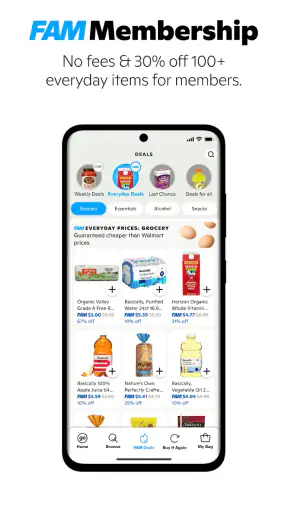
The selection is best understood as a convenience assortment. I would expect the app to be helpful for combining food and household needs in one order, but I would not approach it expecting the depth of a large supermarket. A quick search may reveal a suitable option without presenting every size, flavour, or brand I might find in a physical shop. That trade-off is part of the service: less time spent travelling and browsing, but potentially less choice.
When I build a basket, I check the exact item description and size before moving on. This is especially important for products that sound similar but serve different purposes, such as individual portions versus multipacks or a snack versus a larger sharing format. A fast order can still become frustrating if I add the wrong version and only notice after checkout. I also group the basket mentally by purpose: something needed immediately, something useful to reach the trip threshold if applicable, and anything that is merely tempting.
That last distinction is more important than it sounds. The app encourages quick additions because the whole experience is built around convenience, so I try to keep the basket tied to the original problem. For a late-night order, I would rather receive the few things that solve the situation than turn an urgent delivery into an expensive substitute for a planned shop.
Checking the practical details before paying
Before confirming, I review the basket, the delivery information, and the final checkout details carefully. I do not assume that the fastest advertised experience applies equally to every address or every moment. A busy period can change the timing, and an item that appeared during browsing may need another look at checkout. The useful question is not simply “Can this arrive quickly?” but “Is the displayed option acceptable for what I need tonight?”
This is also the stage where I decide whether a replacement or a missing item would undermine the whole order. If I am buying ingredients for a specific recipe, a substitute may not work. If I am buying general snacks or household supplies, flexibility is easier. I would therefore avoid using a rapid delivery app for a meal plan that depends on several exact products unless I have a backup plan.
Because the app is free, the financial decision happens mainly inside the order rather than at installation. I compare the convenience with the total checkout cost, including whatever delivery-related charges or order conditions are shown for my location. I do not treat a short delivery window as automatically good value. For one urgent item, the trip may still be cheaper; for several small needs combined into one run, the time saved can make the purchase feel more reasonable.
The handoff from app to fulfilment
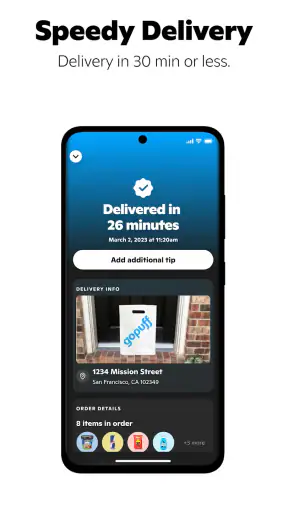
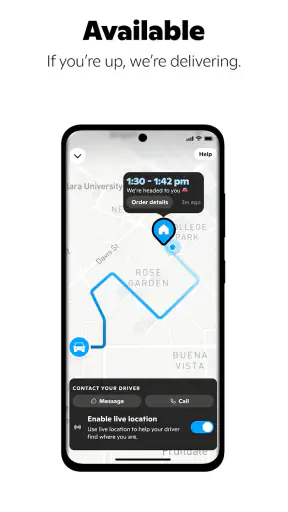
Once I place an order, the experience changes from shopping to waiting. The important handoff is no longer between me and a supermarket shelf; it is between the digital basket, the local fulfilment process, and the person bringing the order. That can feel wonderfully simple when everything is available and the address is clear. It can also expose the limits of a fast service when demand rises or the basket needs clarification.
I make that handoff easier by checking the delivery location before ordering, keeping my phone available, and avoiding an order that depends on a complicated explanation. A clear address and an accessible receiving point reduce the chance that the final stage becomes slower than expected. If another person might receive the order, I also make sure they know what to expect, particularly when the purchase is being made for a shared home or workplace.
This is one of the less obvious differences between Gopuff and a normal supermarket visit. In a shop, I can inspect an item, notice a missing shelf label, and choose an alternative immediately. In the app, I make that decision earlier and then rely on the fulfilment handoff to deliver the result. The convenience is real, but it comes with less direct control over the physical selection process.
What the outcome feels like
When the workflow goes well, the result is not that I have completed a better supermarket shop. The result is that a small problem has disappeared without taking over my evening. I can stay home, avoid a separate journey, and receive a mixed order of food and everyday essentials through one service. That is a meaningful benefit for people with limited time, mobility constraints, late schedules, or an unexpected need.
I find the app strongest for “bridge” orders: the items that carry me from now until the next proper shop. It can cover a missing breakfast component, a few drinks for visitors, a late snack, or a basic household necessity. It is also useful when the shops I would normally use are closed or inconveniently far away. The late-opening emphasis makes particular sense here, because the service is solving a timing problem as much as a shopping problem.
The experience is less compelling when I want to compare unit prices, inspect freshness personally, or plan a large and carefully optimised basket. A physical supermarket gives me more control over substitutions and product condition. A conventional grocery delivery service may provide a broader catalogue and a better structure for scheduled weekly shopping. Gopuff wins when speed and simplicity matter more than maximum range.
Who is likely to appreciate it
I would recommend trying it to someone who regularly has small, urgent shopping gaps. Students, busy households, people working late, and anyone who dislikes making a separate trip for a few essentials may find the workflow especially convenient. It can also help when a shared household realises too late that something basic is missing and wants one person to solve the problem without leaving home.
The app is a particularly good fit for users who can make quick decisions. If I already know what I need and can accept a narrower selection, the short path from search to order feels efficient. If I enjoy comparing dozens of alternatives, reading every label in person, or planning around promotions, I may find the experience less satisfying.
I would also be cautious about relying on it for dietary or ingredient-sensitive shopping without checking every product detail myself. A rapid interface can make it easy to move quickly, but quick is not the same as thorough. For a specific allergy, medical diet, or recipe requirement, I would verify the item carefully and keep an alternative source in mind rather than assuming the first matching result is suitable.
Where the workflow breaks down
The main weakness is the same feature that makes the app attractive: speed creates expectations. When the order is small and the selection is available, the experience can feel almost frictionless. When an item is unavailable, the timing changes, or the basket does not match what I had in mind, the loss of control becomes more noticeable because I chose the service specifically to avoid hassle.
Another limitation is value. Convenience delivery is rarely the right tool for squeezing every penny from a large shop. I may pay for saved time, reduced effort, and access outside ordinary shopping hours. That can be worthwhile, but I should decide consciously rather than comparing the order with a supermarket shelf price alone. The best value often comes from combining several genuine needs into one sensible basket, not from placing repeated tiny orders whenever I remember one item.
Selection can also be a deciding factor. If I need a particular brand, an unusual ingredient, or a broad range of fresh products, a larger grocery retailer is more dependable. Gopuff’s focused assortment is an advantage for quick decisions, but it becomes a constraint when the shopping task is specialised. I would not make it my only option for a major celebration meal or a carefully planned pantry reset.
There is also a human handoff to consider. A delivery depends on the order being prepared correctly and reaching the right place, so I avoid ordering when I know I will be unreachable or unable to receive it. A supermarket trip gives me a more immediate fallback: if one item is missing, I can choose another on the spot. With Gopuff, I need to tolerate that some decisions are made before the bag reaches me.
Small habits that improve the experience
My first practical tip is to use the app as a gap-filler rather than a replacement for every grocery routine. I get more from it when I reserve it for time-sensitive needs and keep larger, price-sensitive shops elsewhere. This prevents the convenience from turning into an expensive habit and makes the service’s purpose clearer each time I open it.
Second, I check the basket twice: once for the item I originally needed and again for size, quantity, and suitability. The second pass catches the mistakes that happen when I search quickly. I also remove impulse additions before checkout. That simple pause is valuable because a fast delivery can make unnecessary purchases feel harmless.
Third, I plan around flexibility. If the order is for general refreshments, I can accept a reasonable alternative. If it is for a precise recipe or a sensitive dietary requirement, I choose only when the listed product is clearly right and I have a backup plan. This turns the app’s narrower selection from a surprise into a known trade-off.
Finally, I treat the displayed arrival expectation as a planning aid, not a promise that removes all uncertainty. I order early enough to leave room for normal variation, especially when the item is needed for a fixed event. That small adjustment preserves the benefit of speed without making the whole evening depend on a perfect handoff.
How it compares with the usual alternatives
Compared with walking to a convenience shop, Gopuff saves travel and can combine more types of products in one order. The shop still wins when I am already nearby, need one item immediately, or want to inspect alternatives myself. Compared with a supermarket delivery service, Gopuff feels more immediate and better suited to a small basket, while the supermarket is usually the stronger choice for a planned shop with extensive comparison and broader selection.
Compared with ordering a meal through a restaurant-focused delivery app, Gopuff is more useful when the need includes packaged food, drinks, or household items rather than one prepared dish. A restaurant app may be better when I want a complete cooked meal from a specific kitchen. Gopuff is better when the problem is mixed and practical: breakfast supplies, snacks, beverages, and an everyday essential in the same errand.
The app has clearly found an audience. It holds a 4.6 average from around 90 thousand ratings, with roughly 29 thousand written reviews, and has passed 5 million installs. Those figures do not replace personal judgement, but they suggest that the quick-delivery model resonates with a substantial number of users. I see that popularity as evidence of usefulness for the right situation, not proof that it is the best choice for every kind of grocery shopping.
My final view after following the full workflow
Gopuff works best when I start with a small, concrete problem and want to finish it with minimal effort. The path from search to basket to delivery is easy to understand, and the combination of groceries, food, drinks, and everyday essentials makes it more versatile than a service limited to restaurant meals. Its free download and support for Android 8.0 or later also make it accessible to many users, while the Mature 17+ rating is worth noting for households deciding which apps are appropriate on a shared device.
I would not use it as my only grocery solution. The narrower convenience assortment, the possibility of changing fulfilment conditions, and the cost of rapid delivery can all matter. For a large weekly shop, a supermarket remains the more deliberate option. For a highly specific meal, a specialist retailer may be safer. For a single nearby item, going out may be quicker and cheaper.
But when the starting condition is “I need several ordinary things soon, and I would rather not leave home,” the app makes a strong case for itself. My recommendation is to keep expectations practical, inspect the basket before paying, combine genuine needs, and allow some flexibility in the final selection. Used that way, Gopuff is a useful emergency shelf for everyday life rather than a complete substitute for thoughtful grocery planning.


